Notes Left by Someone
Last updated 2024-12-13
Notes Left by Someone is a Quest Item obtained during the World Quest Awakening's Real Sound in Series Khvarena of Good and Evil.
Contents
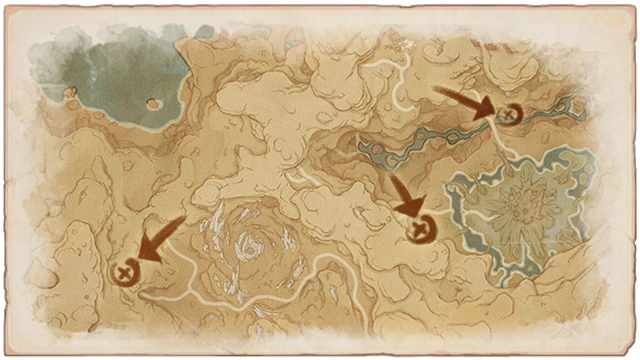
...After scouring the land for days, I have finally found the Korybantes. Alas, I lack the strength to retrieve them. As such, I will record their locations here...
...There is no detailed information on the key contents of the ritual. I have drawn the following inferences from a comprehensive review of the current body of research:
Firstly, the element of the Korybantes matches the element recorded on the drum score.
This is obvious, and requires only a rudimentary understanding.
Anemo and Geo Drums do not exist. The reason for this merits further investigation.
Secondly, the meaning behind the notation.
Notation may be divided into three categories: empty, half-full, full. The hypothesis is that the musical notes refer to three types of rhythms, namely: pause, light, and heavy.
Thirdly, the order of reading.
Unable to be determined. If a lost Kory Drum is found, one can try to read it in the usual order, which is from left to right and top to bottom.
Other Languages
| Language | Official Name | Literal Meaning |
|---|---|---|
| English | Notes Left by Someone | — |
| Chinese (Simplified) | 某人留下的笔记 Mǒurén Liúxià de Bǐjì | |
| Chinese (Traditional) | 某人留下的筆記 Mǒurén Liúxià de Bǐjì | |
| Japanese | 誰かが残したノート Dare ka ga Nokoshita Nooto | Notes Left by Someone |
| Korean | 누군가 남긴 노트 Nugun'ga Namgin Noteu | Notes that Someone Left |
| Spanish | Notas de alguien | Someone's Notes |
| French | Notes laissées par quelqu'un | Notes Left by Someone |
| Russian | Чьи- Ch'i-to zapisi | Someone's Notes |
| Thai | บันทึกที่บางคนทิ้งไว้ | |
| Vietnamese | Ghi Chép Ai Đó Để Lại | |
| German | Von jemandem zurückgelassene Notizen | Notes Left by Someone |
| Indonesian | Catatan Peninggalan Seseorang | Notes Left by Someone |
| Portuguese | Notas Deixadas por Alguém | |
| Turkish | İsimsiz Notlar | |
| Italian | Appunti lasciati da qualcuno |