God
Last updated 2026-09-01

It may be disorganized, difficult to reference, have problems with styling or layout, have ambiguous information, or more.
Please help improve this page if you can.
Gods (Chinese: 神 or 魔神 Shén or Móshén) are immortal and supernatural entities that lead and oversee the Human Realm, possessing natural and innate divine, elemental or magical powers. Teyvat's gods are affiliated with Celestia—the realm and residence of the gods—although several gods have displayed wariness or even resentment towards the heavenly citadel.
Before the Archon War, many gods roamed the continent of Teyvat. After the Heavenly Principles had their functions ruined during the war of funerary flame, efforts were made to establish a new world order;[1] seven divine seats opened up in Celestia,[2][3] causing the continent to descend into a protracted series of conflicts that ended 2000 years ago. Over the course of the war, most gods were slain or sealed until only seven victors remained; each victor became their respective element's Archon and ruler of one of the seven nations,[Note 1] using their powers to transform its terrain and governing the land according to their ideals.
Overview
Gods are a class of Human Realm[4] beings that exist for the task of governing Teyvat. It is implied that gods attain their status via power obtained from the Heavenly Principles,[5][6] though the precise mechanism for how this occurs in general is unknown. As evidenced by Boreas and Venti, gods can be elevated from a lower existence and given powers from another god.[7][8]
A god's essence is essentially immortal and cannot be destroyed - even if a god's physical form is slain and their consciousness is worn away, their lingering emotions or obsessions will remain within the world, and their power will not dissipate but flow into the surrounding environment.[9] The exact circumstances of "death" can produce very different consequences: if a god is murdered against their will, their power erupts out of their body and corrupts everything around them (like Havria salinizing her adherents after they assassinated her)[10], and may linger in form of curses that cause death, disease and insanity to anybody who comes into contact with them (the best example being the Tatarigami).[11]
However, if a god chooses to voluntarily pass away, they can release their power in a controlled manner so that it does not create any disruptive effects upon the land (as Boreas[12] and Marchosius[13] did). Similarly, Remus's death had no apparent negative effects on the Sea of Bygone Eras; instead, his will protected the ruins of Capitolium, preserving them remarkably well over 2,000 years.[14][Note 2]
It is possible to seal away a god's remains or neutralize the effects of their curses using special techniques. For example, when the Hydro Archon Egeria perished during the Cataclysm, Greater Lord Rukkhadevata was able to create the Harvisptokhm from the pool of Amrita left in her wake and use it to repel the Abyss,[15] and Raiden Shogun created the Narukami Pillars on Yashiori Island which suppressed the influence of the Tatarigami following Orobashi's execution.[16] Following the Archon War, every region in Teyvat developed its own way of dealing with the hateful resentments of bygone gods: for example, Liyue has the Yakshas that fight against the monsters that emerge from these remains,[17] Inazuma's Sacred Sakura continuously absorbs the filth and needs to be periodically cleansed,[18] Sumeru uses the Forest Rangers to monitor and keep the Withering in check, and Natlan held the Pilgrimage of the Return of the Sacred Flame to generate Contending Fire with which to combat the Abyss.[19] In case a god's remains are injected into a human being, they can drive them insane, cause extreme personality changes, or bestow unusual powers.[20][21]
Elemental dragons hold power equal to a god's.[22]
Story
Ancient History
Gods came into being after the establishment of the Human Realm and hold the Human Realm's power, making them incompatible with the Light Realm and Void Realm's powers under normal circumstances.[4]
Archon War
The Archon War was a prolonged conflict between gods for supremacy that began several thousand years ago and ended two thousand years ago.[2] The war allegedly began over the seven divine thrones which opened up in Celestia,[3] which may coincide with the creation of the Gnoses following the war of funerary flame which greatly weakened the Heavenly Principles.[1] According to Neuvillette, all fragments of the primordial were driven to devour each other.[1]
2600 years ago in Old Mondstadt, in the midst of the Archon War, Boreas warred against the God of Storms, Decarabian. In their bitter stalemate, Decarabian's people rose up against him and emerged victorious. After Decarabian's death, Barbatos became the Anemo Archon,[23] while Boreas decided himself unfit for the position and chose to pass on instead, using his winds to nurture the new Mondstadt that Barbatos created.[24]
The Guili Assembly, established by Guizhong, Rex Lapis and Marchosius in Guili Plains in the distant past, was one civilization destroyed during the chaos of the Archon War. Shortly after the fall of the Guili Assembly 3,700 years ago, Rex Lapis and the adepti gathered the survivors and took them south of Mt. Tianheng, where Liyue Harbor was established.[25] Some time afterwards, Havria was murdered by her own people for being weak, and the survivors of Sal Terrae were scattered across Liyue. Rex Lapis subdued countless other gods and monsters, including Osial, Chi, and the Mistress of Chenyu Vale.
In Inazuma, the twin gods Makoto and Ei emerged victorious, with Makoto assuming the position of Electro Archon and her sister sharing many of her duties while acting as her kagemusha. The only rival god known to have been slain during this period was the god of Watatsumi Island, Orobashi, though the Thunderbird of Tsurumi Island, Kanna Kapatcir, was revered as a god by her people. Notably, the duty of slaying such foes during the Archon War fell upon Ei, rather than the Electro Archon.
Instead of warring, Sumeru's gods, King Deshret, Nabu Malikata, and Rukkhadevata forged an alliance in the city of Ay-Khanoum.[26] However, King Deshret still engaged in warfare against other gods in Sumeru beyond the alliance, such as Remus,[27] Heryshaf, Sobek, and Thoth. Nabu Malikata later allowed herself to be corrupted by the Abyss,[28] and the alliance was broken,[29] with Rukkhadevata leaving Deshret's lands, never to return.[30]
In Fontaine, Remus was the sole god residing in Fontaine's surface during the Archon War, due to Egeria's imprisonment beneath the waves at the behest of the Heavenly Principles.[31] The war in Fontaine instead took the form of Remuria's expansion and subjugation of various tribes, and a resistance movement led by the mortal, Erinnyes of Aremorica, who spread the faith of Egeria. Following the death of Remus at the hands of Phobos, and the drowning of Remuria, Egeria was freed from her prison and granted rulership over Fontaine as its Archon.[32]
Gods had no place in Natlan; instead, the Archon War period saw repeated conflicts between the dragons and humans of Natlan.[33] The first Pyro Archon was a human named Xbalanque who defeated the still-reigning Sovereign Xiuhcoatl, and was thus granted authority over the divine throne and ascended to godhood by the Ruler of Death, Ronova,[34] as planned by the dragon Sage, Kukulkan.[35] However, the god Yohualtecuhtin of the Night Kingdom had numerous relations with humans in ancient history, first helping create the Wayob for the tribes,[36] and later helping create the "Rules" of Natlan such as the Ode of Resurrection with the help of Xbalanque and Ronova.
Around 2000 years ago, the Archon War drew to a close as the seventh and final victor claimed their seat. These victors were thereafter known as the Seven Archons, and came to possess one of the Gnoses as well as a portion of the elemental Authority for their element. Gods who refused to live under their rule fled to islands within the Dark Sea, regions beyond the control of The Seven, where they became evil gods.[37]
Of the seven victors of the Archon War, only two remain by the start of the game's story: Barbatos and Rex Lapis.[38][39] While Ei was present during the Archon War, she did not assume the position of Electro Archon until her twin sister Makoto perished during the cataclysm 500 years ago. Most of The Seven's current members replaced the original founders of Teyvat's seven nations.
Present Day
Among The Seven, each Archon is associated with and worshipped by one of Teyvat's seven nations. Most of a nation's elemental environment is based on its Archon's element, although areas affected by Celestial Nails, such as Dragonspine, the Great Red Sand, the Night Kingdom, and Tsurumi Island tend to be noticeably different from their surroundings.
An Archon's power is directly tied to their level of control over their nation. As a result, Venti — who travels as a bard and refuses to directly control the people of Mondstadt — is, by his own admission, extremely weak by Archon standards.[40] However, this is later indirectly challenged by Nahida, who states that an Archon's power is tied to how much faith their people have in them.[41] When a person's powerful wish reaches the heavens, Archons are obligated to give that person a Vision, which is a shard of the elemental Authorities[1] and allows the recipient to manipulate elemental energy. Vision wielders are known as "allogenes" and are also privileged with the chance of rising to godhood.[42] In the year that the Vision Hunt Decree was in effect in Inazuma, no new Electro Visions appeared throughout Teyvat, leading scholars to conclude that the Archons' wills play a role in Vision distribution.[43] However, Ei is surprised to hear of this phenomenon herself and refutes the scholars' conclusion.[44]
Celestia
Celestia serves as the headquarters for the governance of Teyvat and is the residence for the Heavenly Principles, the Four Great Rulers, as well as an indeterminate amount of other gods and entities.[45] It is said that mortals who perform great, heroic feats can ascend to Celestia and achieve godhood, where they will watch over their people from above.[46] All Vision wielders are "allogenes" who have the potential to reach godhood.[47]
Angels
Angels are creations of the Heavenly Principles who served as the divine envoys of Celestia during the era of the unified civilization.[48] Certain individual Angels have been referred to as gods, though Angels at large are not technically considered gods according to Nicole.[49] Many Angels previously resided in Celestia during the era of the unified civilization, though all of them were cast out following the war of funerary flame.[48]
Moon Goddesses
The Moon Goddesses are a group of entities associated with the Three Moons of Teyvat. Though they were originally created by Nibelung in the era of the ancient dragons, they were since incorporated into and given a place in the world order of the Human Realm after Teyvat was conquered by the Heavenly Principles; they are consequently commonly referred to as gods.[50]
Seven Archons
The Seven Archons are the seven gods who preside over the seven nations of Teyvat.[51] They were established following the conclusion of the Archon War 2,000 years ago,[52] with the seven remaining victorious gods being appointed by the Heavenly Principles as Archons.[49] Each of the Archons are in possession of one of the seven elemental Authorities of the Seven Sovereigns.[53]
Other Gods
| Image | Name | Other Titles | Region | Status |
|---|---|---|---|---|
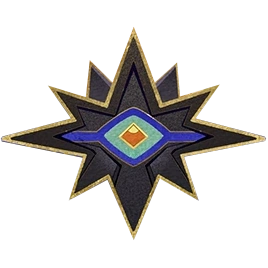 |
Al-Ahmar, Amun | King Deshret | Sumeru | Deceased |
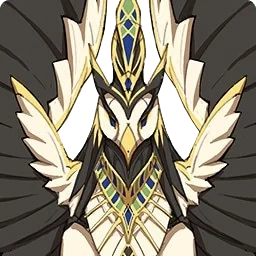 |
Bennu[Note 3] | Most-Radiant | Sumeru | Alive |
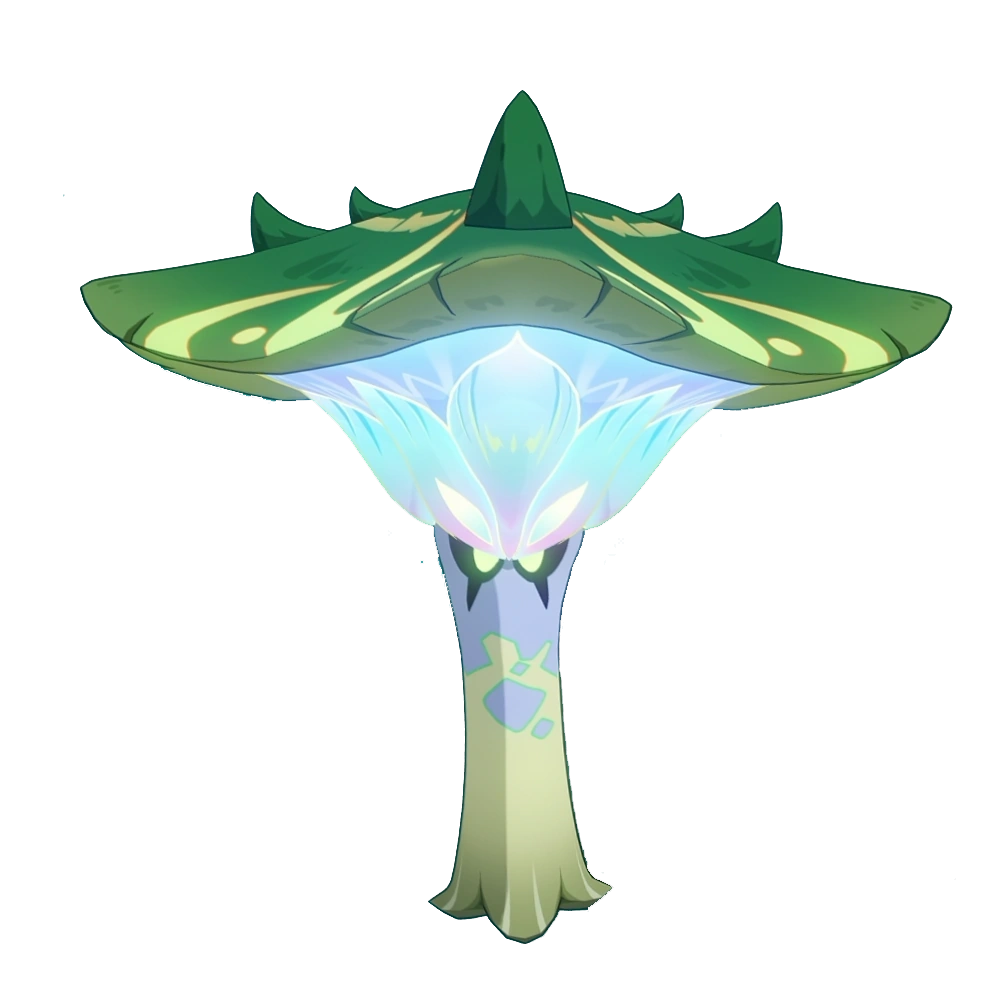 |
Bifrons | Sage-Lord of Fungi | Sumeru, Natlan | Buried underground after a volcanic eruption |
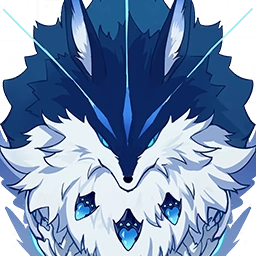 |
Boreas, Andrius | God of the North Wind | Mondstadt, Snezhnaya, Nod-Krai | Deceased; spirit remains extant.[54] |
 |
Chi | Qingce | Liyue | Sealed away by Morax[55][56] |
|
Decarabian | God of Storms | Mondstadt | Deceased |
 |
Guizhong, Haagentus[57] | God of Dust | Liyue | Deceased |
|
Havria | God of Salt | Liyue | Deceased[58] |
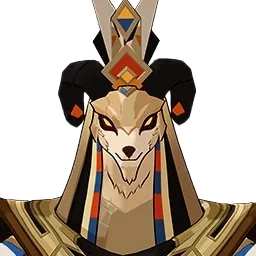 |
Heryshaf[59] | Goat King | Sumeru | Alive |
 |
Marchosius | God of the Stove | Liyue | Gave his power to the land, currently in the form known as Guoba[60] |
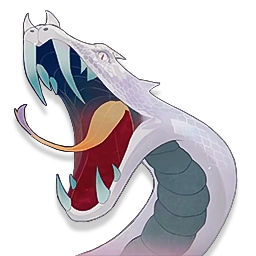 |
Orobashi | Watatsumi Omikami | Inazuma, Enkanomiya | Deceased |
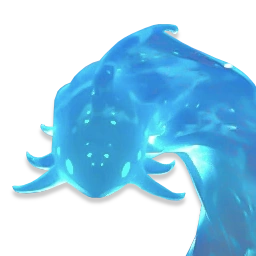 |
Osial | Overlord of the Vortex | Liyue | Sealed |
|
Remus | Sebastos | Sumeru,[27] Fontaine | Deceased |
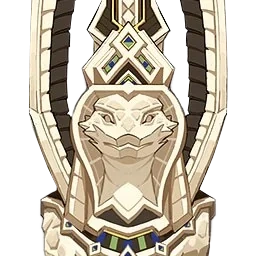 |
Shesepankh[Note 3] | Most-Holy | Sumeru | Alive |
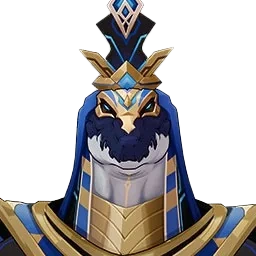 |
Sobek[61] | Crocodile King | Sumeru | Alive |
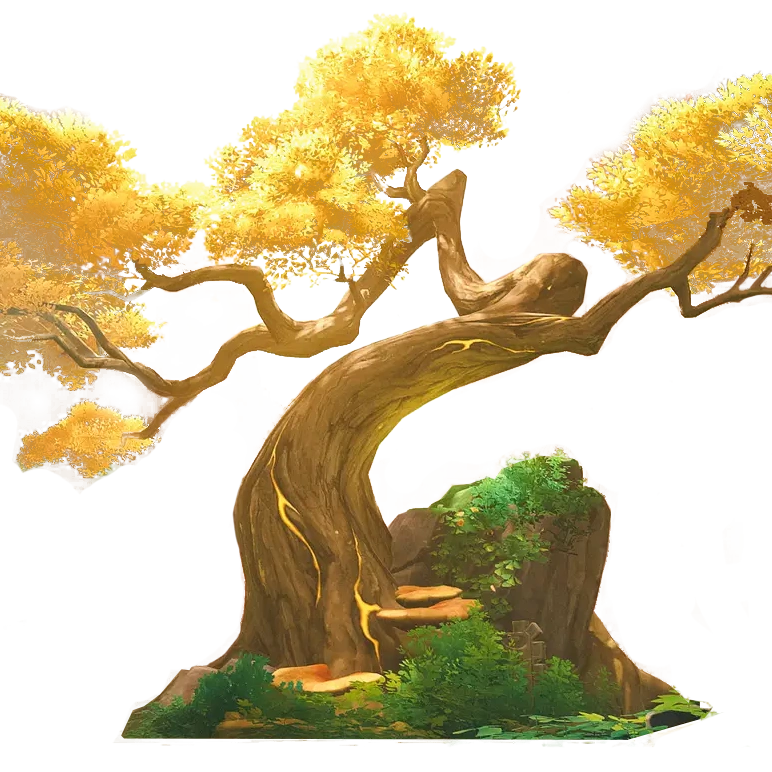 |
Tao Dou, Bune[62] | God of the Underworld | Liyue | Deceased |
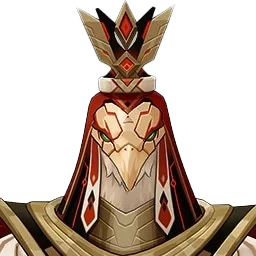 |
Thoth[63] | Ibis King, God of Deceit | Sumeru | Alive |
|
Unknown | Mistress of Chenyu Vale The god of Chenyu Vale, Fujin and Herblord's former master.[64] |
Liyue | Sealed[65] |
|
Unknown | Sea God[66] | Liyue | Unknown |
|
Unknown | None known The god's remains were sealed in the Guili Plains and collected by Skofnungr.[67] |
Liyue | Deceased |
|
Unknown | None known The god's remains were buried in the desert and collected by Skofnungr.[67] |
Sumeru | Deceased |
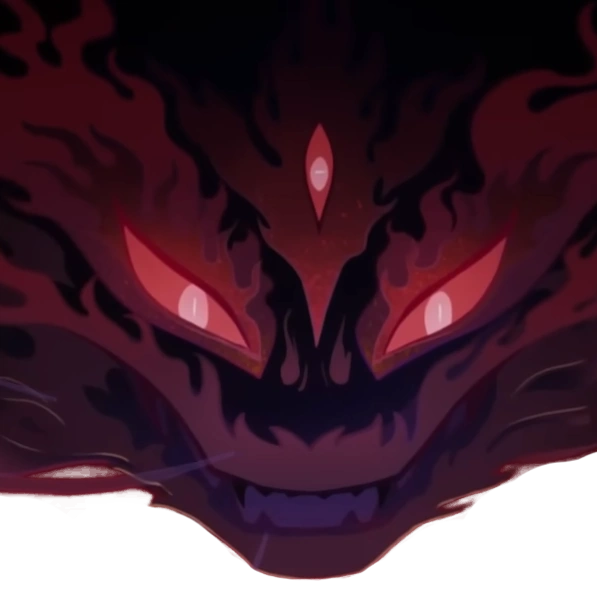 |
Unknown | None known The evil god's remains to whom Shenhe was to be sacrificed.[68] |
Liyue | Deceased |
|
Unknown | None known The god's remains were attracted and incited monsters to chase Yuandai.[69] |
Liyue | Deceased |
|
Unknown | None known The ancient god's tomb and remains cursed anyone touching it.[70] |
Sumeru | Deceased |
|
Unknown | None known The god who ruled Qingxu Pool.[71] |
Liyue | Unknown |
|
Unknown | None known The god who slashed Mt. Tianheng.[72] |
Liyue | Unknown |
|
Unknown | None known Xiao's former master[73] |
Liyue | Deceased[74] |
|
Unknown | None known The god of the general who was blocked by "Dainty Fists".[75] |
Liyue | Unknown |
|
Unknown | None known The god who fell in the Archon War related to the ruins of Fort Mumei.[76] |
Inazuma | Unknown |
| Uncertain placement | ||||
| This lists entities whose godhood has not been entirely confirmed by the game's canon. | ||||
 |
Kitsune Saiguu[77][Note 4] | Kitsune Hakushin | Inazuma | Deceased |
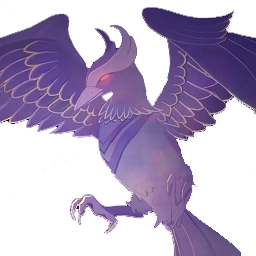 |
Kanna Kapatcir[78][Note 5] | Great Thunderbird | Inazuma | Deceased |
|
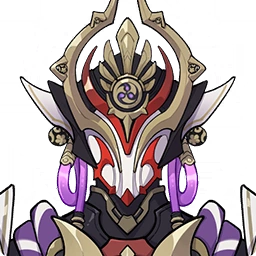
Unknown | Thorn King[79][Note 6] | Mondstadt | Unknown |
|
Scaramouche[80][Note 7] | Everlasting Lord of Arcane Wisdom; Shouki no Kami, the Prodigal | Sumeru | Defeated and ostensibly always autonomous;[81][Note 8] presumed defunct |
|
Unknown | Deity of the Dog Days[82] | Natlan | Deceased[82] |
|
Unknown | God of Fertility[83] | Unknown | Unknown (possibly fictitious) |
|
Unknown | God of Hot Pot[84] | Unknown | Unknown |
|
Unknown | God of Thieves[85] | Unknown | Unknown |
|
Unknown | Jade-Skirted Mistress of Heavenly Stars[82] | Natlan | Deceased[82] |
|
Unknown | None known Gods originally worshipped by the barbarian tribes of Fontaine, whom Erinnyes forced to pledge themselves to Egeria and acknowledge that their gods were all aspects of her.[86] |
Fontaine | Unknown |
Notes
- ↑ It is currently unclear whether the seven nations' territories were already determined before the start of the Archon War or not.
- ↑ While Remus sacrificed his life to unleash the power of the Symphony, it was the Symphony's power that caused the tsunami that sank Remuria, not his death.
- ↑ 3.0 3.1 The Guiding Notes entries for Bennu and Shesepankh state that "unlike the three Kings" (who "could once have stood among the gods, only to be defeated by King Deshret and brought into his service"), they are "intelligent constructs fashioned by King Deshret". Additionally, in the Chinese original text of the quest Archon Quest Ancient Shadows Re-Emerge in Song of the Welkin Moon: Act IX - As All Falls to Emptiness, the god Heryshaf refers to Bennu and Shesepankh as gods (Chinese: 魔神) when awakening them. The relevant line reads: 圣者·谢斯芬赫,圣者·贝努,为神王殉葬自我沉默之魔神 "Saint Shesepankh, Saint Bennu, once you surrendered to silence and were buried with King Deshret," lit. "Saint Shesepankh, Saint Bennu, the gods who were buried with King Deshret and surrendered to silence"
- ↑ Kitsune Saiguu was worshipped as a kitsune goddess in many places.
- ↑ Kapatcir is referred to as a 守护神 ("guardian god") in the original Chinese text. The term contains the character 神 (shén), the standard Chinese word for "god". The relevant line reads: 别人都叫她雷鸟。是我们这里的守护神哦, lit. "Everyone calls her the Thunderbird. She is the guardian god of our land."
- ↑ Some researchers posit that the "Thorn King" was an ancestor of the Gunnhildr clan.
- ↑ Nahida states during The Kabukimono's Finale that Scaramouche "tried to achieve godhood" but "was unsuccessful" based on the Traveler's retelling of Scaramouche's story, Where the Boat of Consciousness Lies is filled with numerous indicators, including statements from Nahida herself, that Scaramouche did become a god in some form.
- ↑ Nahida states that Scaramouche "nearly became Sumeru's deity." However, in some of the scenarios, after defeating the machine, Scaramouche was not found inside. Moreover, Azar states once a connection was successfully established, Scaramouche's body would be permanently bound to the machine, and he would be unable to move independently of it.
Trivia
- The term God is unisex, with female figures like Ei and Nahida being referred to as Gods rather than Goddesses. This is not absolute however, such as with the Goddess of Flowers.
- Each gemstone used for ascension has the words and blessings from The Seven for the reader.
- Gods can take whatever form they please; Morax has taken the form of a young man, a woman, and an elderly man,[87] with Zhongli as his most recent vessel. Venti's vessel is based on the Nameless Bard's.
- Vessels constructed through an archon's power have different compositions from regular human bodies; for example, Venti cannot be healed normally (in story, not in gameplay), while Zhongli indicates that he cannot get sick. That said, Venti is somehow allergic to cats. These human vessels are nonetheless not untouchable, as Venti is visibly winded and knocked unconscious from La Signora's attack.
- Due to stylistic choices made by original Chinese text and the English localization, some of the terminology pertaining to gods has been the subject of debate.
- In Chinese, gods before the rise of The Seven are often distinguished by including 魔神 "Demon God" in their titles, but the English localization does not keep this term and usually translates it as "God" or omits it entirely. For example, Decarabian's title of 烈风的魔神 "Demon God of Gales" was localized as "God of Storms," while Guizhong's 尘王魔神 "Dust Lord Demon God" was localized as "Lord of Dust" and Osial's 漩涡之魔神 "Demon God of Vortexes" was localized as "Overlord of the Vortex."
- Conversely, the term "Archon" is used in the English localization to denote The Seven's members, based on the game's Gnostic inspiration. However, there is no equivalent term in their Chinese titles, which led to early localization issues where many instances of 神 shén, "god" were indiscriminately translated as "archon" without taking context into account. In Version 1.3, the English localization adjusted most instances of "archon" to primarily refer to The Seven, but some instances have not been changed.
- The Chinese name for Archon Quests is 魔神任务 "Demon God Quests," indicating that the Traveler's journey will involve the gods of old and not just The Seven.
- The original Chinese text distinguishes some of Morax's accomplishments before becoming one of The Seven with the title 岩之魔神 "Demon God of Geo," as seen in Heart of Glaze and Zhongli's Character Story, That Which Rises From the Sea. In both instances, the English localization opted to translate the title as "Geo Archon" anyways. While Heart of Glaze made no attempt to distinguish the phrase from typical occurrences of "Geo Archon" (which would normally be either 岩神 or 岩之神), That Which Rises From the Sea added the phrase "long before he took that title" to clarify that the story occurred before Morax became one of The Seven.
Etymology
- The term "archon" is a Greek word that refers to "A person who claims the right to rule, or to exercise power or sovereign authority over other human beings." Genshin Impact uses its Gnostic usage,[88] in which the archons are seven supernatural beings subservient to the demiurge, the creator of the material universe who is beneath the Monad, the true God. Each archon presides over one of the seven planets. By reaching gnosis, an understanding of divine knowledge, one can transcend the confines of the mortal world and escape the dominion of the archons.
- In Manichaeism, a religion derived from Gnosticism, there are five archons who together make up the Prince of Darkness. Here, the Archons are seen as an undeniably evil force.
- The Chinese term for gods that predate The Seven, 魔神 "demon god," stems from the standard Chinese translation for the demons in the Ars Goetia — from which a deity's name is derived — is 所罗门七十二柱魔神 "Solomon's 72 Demon Gods."
- Asmoday, Barbatos, Morax, Baal, Buer, Haborym, Bifrons, Naberius, Paimon, and Bune are directly lifted from the Ars Goetia.
- Beelzebul is an alternate spelling of Beelzebub, who is associated with Baal but is not from the Ars Goetia.
- Haborym is an alternate name for Aim.
- Asmoday is alternate spelling of Asmodeus.
- Ronova is derived from Ronove.
- Istaroth is derived from Astaroth.
- Focalors is derived from Focalor.
- Amun is derived from Amon/Aamon and the Egyptian deity Amun.
- Andrius may be derived from Andras, or Andrealphus based on his Chinese name. (See Boreas' Etymology section for details.)
- Decarabian is derived from Decarabia.
- Haagentus, the other name of Guizhong, is derived from Haagenti.
- Havria is a feminized form of Havres, a corruption/misinterpretation of Flauros.
- Marchosius is derived from Marchosias.
- Osial appears to be a portmanteau of Ose and either Belial or Furfur, the latter based on its Chinese name. (See Osial's Etymology section for details.)
- Orobashi is derived from Orobas.
- Asmoday, Barbatos, Morax, Baal, Buer, Haborym, Bifrons, Naberius, Paimon, and Bune are directly lifted from the Ars Goetia.
- The Chinese and Japanese term for "allogenes" is "primordial god" (Chinese: 原神 Yuánshén; Japanese: 原神 Genshin), the same word used in the game's title.
- In Gnosticism, "Allogenes," also known as the "Stranger," is a Gnostic figure who is half-human, half-divine, and has the power to communicate with other realms. In some writings about Allogenes, he is said to have become fully divine.
Other Languages
| Language | Official Name | Literal Meaning |
|---|---|---|
| English | God / Archon[• 1] | — |
| Chinese (Simplified) | 魔神 / 神 Móshén / Shén | Demon God / God |
| Chinese (Traditional) | 魔神 / 神 Móshén / Shén | |
| Japanese | 魔神 / 神 Majin[89] / Kami[90] | Demon God / God[• 2] |
| Korean | 마신 / 신 Masin / Sin | Demon God / God |
| Spanish | (Dios/ | God / Archon |
| French | Dieu / Archon | God / Archon |
| Russian | Бог / Архонт Bog / Arkhont | God / Archon |
| Thai | เทพปีศาจ / เทพ Thep Pisat / Thep | Demon God / God |
| Vietnamese | Ma Thần / Thần | Demon God / God |
| German | Gott / Archon | God / Archon |
| Indonesian | Dewa / Archon | God / Archon |
| Portuguese | (Deus/ | (God/ |
| Italian | (Dio/ | (God/ |
- ↑ English: Distinction between "God" and "Archon" is inconsistent within and across languages. See translation notes for details.
- ↑ Japanese: 神 is read as shin or jin when used as a suffix.
References
- ↑ 1.0 1.1 1.2 1.3 Neuvillette's Character Story: Vision
- ↑ 2.0 2.1 World Quest, Part 1: Treasure Lost, Treasure Found
- ↑ 3.0 3.1 World Quest, Part 2: Treasure Lost, Treasure Found
- ↑ 4.0 4.1 Book: The Byakuyakoku Collection, Vol. 4
- ↑ Wind Glider: Wings of Merciful, Wrathful Waters
- ↑ Neuvillette's Character Story: Vision
- ↑ Venti's Character Story: Character Story 4
- ↑ Archive, Living Beings, Enemies and Monsters, Enemies of Note: Andrius
- ↑ Xiao's Character Story: Character Story 1
- ↑ Story Quest, Zhongli, Historia Antiqua Chapter: Act I - Sal Flore, Part 4: Farewell, Sweet Salt
- ↑ Weapon Ascension Material: Golden Branch of a Distant Sea (Description)
- ↑ Character Level-Up Material: Spirit Locket of Boreas
- ↑ Event Moonlight Merriment Quest: Part II, Part 2: Three to Get Ready, and Here We Go
- ↑ World Quest, Canticles of Harmony: Third Movement - Pharsalia's Rhapsody, Part 1: Gradus ad Capitolium
- ↑ Artifact, Vourukasha's Glow: Vibrant Pinion
- ↑ Book: Teyvat Travel Guide, Vol. 3
- ↑ Book: Yakshas: The Guardian Adepti
- ↑ World Quest Act: Sacred Sakura Cleansing Ritual
- ↑ Archon Quest, Chapter V, Act I - Flowers Resplendent on the Sun-Scorched Sojourn, Part 1: Natlan! A New Adventure
- ↑ Manga, Chapter 15: Conclusion
- ↑ Archon Quest, Chapter III, Act I - Through Mists of Smoke and Forests Dark, Part 3: Chronic Illness
- ↑ Book: Breeze Amidst the Forest, Vol. 1
- ↑ Venti's Character Story: Character Story 3
- ↑ Weapon Ascension Material: Boreal Wolf's Nostalgia
- ↑ Book: Stone Tablet Compilations: Vol. I
- ↑ Artifact, Flower of Paradise Lost: Amethyst Crown
- ↑ 27.0 27.1 Artifact, Fragment of Harmonic Whimsy: Harmonious Symphony Prelude
- ↑ Artifact, Flower of Paradise Lost: Secret-Keeper's Magic Bottle
- ↑ Artifact, Gilded Dreams: Shadow of the Sand King
- ↑ World Quest, The Dirge of Bilqis, Part 5: Dune-Entombed Fecundity: Part III
- ↑ Artifact, Fragment of Harmonic Whimsy: Ancient Sea's Nocturnal Musing
- ↑ Weapon: Splendor of Tranquil Waters
- ↑ Tribal Chronicles, Mushroom Realm Mystery, Act III - Field Fungal Traces: Smokeless War
- ↑ Archon Quest, Chapter V, Act II - Black Stone Under a White Stone, Part 3: Echoes of Life
- ↑ Artifact Set, Obsidian Codex
- ↑ Artifact, Obsidian Codex: Myths of the Night Realm
- ↑ Weapon Ascension Material: Bit of Aerosiderite
- ↑ YouTube: Version 1.1 "A New Star Approaches" Trailer description
- ↑ Archon Quest, Chapter I, Act III - A New Star Approaches, Part 3: Solitary Fragrance
- ↑ Archon Quest, Prologue, Act III - Song of the Dragon and Freedom, Part 1: Abyss Mage
- ↑ Archon Quest, Chapter III, Act V - Akasha Pulses, the Kalpa Flame Rises, Part 4: Where the Boat of Consciousness Lies
- ↑ Archon Quest, Prologue, Act III - Song of the Dragon and Freedom, Part 8: Ending Note
- ↑ World Quest: Endless Research
- ↑ Raiden Shogun's Voice-Over: About the Vision
- ↑ YouTube: Teyvat Chapter Interlude Teaser: The Gods' Limits
- ↑ NPC Dialogue: Dr. Edith
- ↑ Archon Quest, Prologue, Act III - Song of the Dragon and Freedom, Part 8: Ending Note
- ↑ 48.0 48.1 Artifact, Finale of the Deep Galleries: Deep Gallery's Lost Crown
- ↑ 49.0 49.1 Archon Quest, Song of the Welkin Moon, Act X - Truth Amongst the Pages of Purana, Part 3: Truth Amongst the Pages of Purana
- ↑ Archon Quest, Song of the Welkin Moon, Act VIII - True Moon, Part 1: The First Sliver of Moonlight
- ↑ Archon Quest, Prologue, Act I - The Outlander Who Caught the Wind, Part 1: Bird's Eye View
- ↑ Archon Quest, Chapter I, Act III - A New Star Approaches, Part 2: Equilibrium
- ↑ Archon Quest, Chapter IV, Act IV - Cataclysm's Quickening, Part 4: Calamitous Tread
- ↑ Character Level-Up Material: Tail of Boreas
- ↑ Story Quest, Baizhu, Lagenaria Chapter: Act I - The Heart of Healing, Part 2: The Quest for a Cure
- ↑ World Quest: The Chi of Yore
- ↑ Event The Exquisite Night Chimes Quest: Part II, Part 1: A Single Harmony for an Irreplaceable Soul
- ↑ Book: Customs of Liyue, Vol. 1 - Flower Ball
- ↑ Guiding Notes: Heryshaf
- ↑ Story Teaser: Flavors of the World
- ↑ Guiding Notes: Sobek
- ↑ Furnishing: Divine Remains, Left to Pacify the Nether
- ↑ Guiding Notes: Thoth
- ↑ World Quest, Chenyu's Blessings of Sunken Jade, Part 3: An Ancient Sacrifice of Sacred Brocade
- ↑ Book: Mt. Lingmeng Gossip, Vol. 3
- ↑ Book: Records of Jueyun, Vol. 2
- ↑ 67.0 67.1 Story Quest, Skirk, Crystallina Chapter: Act I - Whispers Betwixt Stars and Night, Part 1: Sinister Undercurrent
- ↑ Archon Quest, Interlude Chapter, Act I - The Crane Returns on the Wind, Part 3: Bygones Times Like Dust Passing
- ↑ Story Quest, Xianyun, Grus Serena Chapter: Act I - A Thousand Moonlit Miles, Part 3: Lovely Dreams
Xianyun:Those monsters would hardly have pursued you with such ferocity without sufficient incentive. They were likely incited by the presence of godly remains. - ↑ Weapon: Dialogues of the Desert Sages
The Ibis King brought forth another rare being, one who had accidentally touched the tomb and remains of an ancient god, and been cursed. Due to the curse, anything touched by both his hands would slowly become pure silver... - ↑ Book: Diary of Roald the Adventurer, Vol. 8
- ↑ NPC Dialogue, during Lantern Rite: Madame Ping
Madame Ping: But then, that fateful battle happened... The gods exchanged powerful blows, and the mountains started collapsing. - ↑ Xiao's Character Story: Character Story 2
- ↑ Weapon: Jade Vista
- ↑ Furnishing: "Dainty Fists"
A great general under the command of a rival god passed by, saw the rocks in the road, and scoffed... - ↑ Archon Quest, Chapter II, Act III - Omnipresence Over Mortals, Part 1: Sword, Fish, Resistance
- ↑ World Quest, Sacred Sakura Cleansing Ritual: Tanuki-Bayashi in the Forest
- ↑ World Quest, Through the Mists: The Sea of Fog and the Rite of the Trees
Ruu: Other people call her the Thunderbird. She's our guardian deity. - ↑ Loading Screen Tip: Dornman Port
The origin of the name "Dornman" has been the subject of some debate. Some researchers believe that before being defeated by Barbatos, the ruler of this land — whose true name has since been lost to history — was called the Thorn King, and his people called themselves "Dornman." - ↑ Archon Quest, Chapter III, Act V - Akasha Pulses, the Kalpa Flame Rises, Part 4: Where the Boat of Consciousness Lies
- ↑ Archon Quest, Interlude Chapter, Act III - Inversion of Genesis, Part 3: The Kabukimono's Finale
Nahida: As (Traveler) said, he very nearly became Sumeru's deity. Admittedly, I remember it a little differently... I don't recall finding anyone inside the machine after we defeated it. - ↑ 82.0 82.1 82.2 82.3 Book: The Headless Coquitao
- ↑ World Quest, Through the Mists: The Sun-Wheel and Mt. Kanna
Kama: She told me a story once, about a god of fertility who dwelt within the wheat fields, and who would travel afar with a human... - ↑ Archon Quest, Chapter II, Act I - The Immovable God and the Eternal Euthymia, Part 8: A Flower Blooms in a Prison
Thoma: Anyone who guesses correctly can go again, and whoever finishes the meal with the most points is declared the winner. Tradition even has it that the winner receives blessings from the God of Hot Pot. - ↑ Archon Quest, Chapter I, Act IV - We Will Be Reunited, Part 1: Involuntary Sacrifice
Lan: Some say that the God of Thieves even bestowed a gift upon her for her exploits, making her the "Big Sis of the Gods." ...But that's probably just a wild rumor. - ↑ Interactable: Investigation of the Northern Barbarians [...] Its leader had forced other chiefdoms to acknowledge that their gods were all aspects of the "Mistress of All Waters," regardless of what god they originally worshipped or what names they had.
- ↑ Book: Rex Incognito
- ↑ Bilibili: 日本女性向杂志「PASH」采访原神开发者
- ↑ Archon Quest, Chapter I, Act III - A New Star Approaches, Part 2: Equilibrium (Japanese Voice-Over)
- ↑ Archon Quest, Prologue, Act I - The Outlander Who Caught the Wind, Part 1: Bird's Eye View (Japanese Voice-Over)
| ||||||||||||||||||||||||||||||||||||||||||||||||||||||||||||||||||||||||||||||||||||||||||||||||||||||||||||||||||||||||||||||||||||