Snowland Fae
Last updated 2026-09-10
The Snowland Fae, originally known as the Filii Adamici Evoluti (F.A.E.), or simply Fae, are a diverse group of nonhuman supernatural beings native to Snezhnaya. Originally created by the Hyperboreans as the "Evolved Children of Humanity,"[1] they formed kingdoms of their own until they were eventually unified by the Belyi Tsar, the first Cryo Archon.[2]
During the Belyi Tsar's reign, the Snowland Fae ruled the Northlands. Since his death, the fae have lost most of their former glory, but still have ways of exerting influence over the nation.[3]
Overview
The fae were created by the artisans of Hyperborea using "forbidden methods" that were taught to them by Koitar. Created and made purely of the Frost Moon's light, all forged upon bones of "giant beasts," these fae spirits are said to have been exceptionally beautiful.[4] The lifespan of the Fae tend to vary drastically depending on the types or species, while some fae are long-lived or even immortal, some fae in other hand have limited lifespans, the Lantern Fae for example can live for centuries and does not show any sign of aging,[5] while the Augury Birds have lifespans that are not much longer than humans.[6] Meanwhile, Domovoy can supposedly live indefinitely,[7] but still age and suffer the associated adverse effects.[8] While most fae seen thus far have humanoid appearances, some of them use shapeshifting abilities to better fit in with human society and do not normally have humanlike forms; Lantern Fae like Flins, for example, normally appear as a floating blue flame.[9] Some fear the fae's shapeshifting ability, especially the prospect of a fae replacing a human child.[10]
All fae possess the ability to manipulate elemental energy and magical powers without the use of a Moon Wheel or Vision.[11][12] Some, like the Jack Frosts, do not have a fixed elemental affiliation; Lumi, for example, exhibits Geo rather than Cryo powers due to consuming large quantities of ore.[13] Most Snowland Fae prefer remaining in Snezhnaya due to its cold and frigid climate; they are rarely seen outside; Nod-Krai is home to a few fae, namely Linnea and Flins, who are able to tolerate warmer temperatures. Other fae who are exposed to such temperatures may exhibit changes to their behavior — Eliseev becomes sleepy when working in Snezhnograd, while Snegoviks and Jack Frosts can faint if exposed to warm environments for prolonged periods of time.
The fae have their own language[9] and script,[14] which are known as Fae and Fae script, respectively. The Fae language does not appear to be mutually intelligible with the Snezhnayan language — a Fatui soldier stated that he "couldn't understand a word" of Preobrazhensky's Fae speech.[15]
Story
History
When the Celestial Nail fell on Hyperborea, many fae were turned into "icy silvery mist."[16] Humans struggles to survive in the frozen landscape that remained, leading to the predominance of the fae thereafter.[17] At some point, the myth that the fae were created to be servants of humans in Hyperborea became accepted as truth, allegedly due to the fear that some had of the fae living amongst humans.[1] Fae formed the aristocracy during the Belyi Tsar's reign, and they led lives of luxury and excess.[18][19] Certain high-status positions were only available to fae, including military ranks like Gvardiya.[20] The fae nobles of the era allegedly believed that the wealth they held was inherently corrupting and thus, "bearing the sin of fullness" was actually doing humanity a favor.[21]
Around 500 years ago, the Belyi Tsar moved his capital city from Kitezhgrad to the newly created Snezhnograd, "pardoned" humanity, and welcomed the wisest humans and fae alike into his court.[2] After his demise and the Tsaritsa's rise to power during the cataclysm, the fae lost their monopoly on Snezhnaya's social and political order, especially following the Tsaritsa's purge of dissenting fae princes and the self-imposed exile of many others.[2][14]
Present Day
Presently, most fae live in Snezhnograd, Novokitezhgrad, and other areas of Snezhnaya.[22] Few live in Nod-Krai or other nations for unknown reasons; Flins suggests that some may have remained in Snezhnograd due to an inability to adapt to warmer climates,[23] but some are able to tolerate them.[24] Fae can take on many forms;[18] the people of Nasha Town and Snezhnograd frequently mistake Paimon for one,[22] while Flins, one of the few fae in Nod-Krai, makes himself appear mostly identical to a human in appearance, though his true form is likely a ball or figure of blue flame. Fae can also tame an otherwise hostile monster like Celaeno was able to tame Haemus, a young Radiant Bladehorn.
While most fae have accepted the Tsaritsa's rule, there are small pockets that oppose her, wishing to return to the time when fae nobility ruled the nation. Some fae, such as Akvilina, view them as despicable traitors. Others simply live out their own lives, working various jobs or joining criminal gangs.
Types
There are six common types of fae and also less common ones.[13] There also appear to be subcategories of fae, as the Nyholmgarthir and Cirnareka are both described as Volkodlak, but each takes on a specific appearance.[2]
The following types of fae have been shown or mentioned. Most share their names with real mythological fairies from slavic folklore.
Common Types
- Jack Frost
- Leshy (Russian: Леший)
- Snegovik (Russian: Снеговик) (females are referred to as "Snegurochka")
- Domovoy (Russian: Домовой)
- Vila (Russian: Вила)
- Volkodlak (Russian: Волкодлак)
Less Common Types
- Augury Bird
- Lantern Fae
- Water Imp (also referred to as "Siren"[13])
Known Snowland Fae
Playable Characters
| Icon | Name | Element | Type |
|---|---|---|---|
|
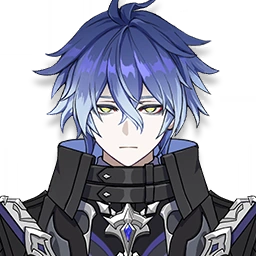
Flins |  (Moon Wheel) (Moon Wheel)
|
Lantern Fae |
|
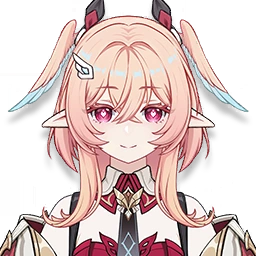
Linnea |  (Moon Wheel) (Moon Wheel)
|
Augury Bird |
Upcoming Characters
| Icon | Name | Element | Type |
|---|---|---|---|

|
Vesna |  (Stellar Linchpin) (Stellar Linchpin)
|
Vila |

|
Vodyanitsa |  (Vision) (Vision)
|
Water Imp |
Vila (Wind Fae)
Domovoy (Household Fae)
Volkodlak (Beast Fae)
- Anfissa
- The Anvil
- Apraksina
- Arseny
- Berezova
- Bogatov
- Bragin
- The Butcher
- Buturlina
- Chelnova
- Eliseev
- Energy Commission Contract Staff
- Evgenyi
- Fadeev
- Furiosa
- Gromov
- Gureva
- Iryna
- Ishogu
- Kirov
- Kleyeva
- Lindenovich
- Lorie
- Matvey
- Meselson
- Miscislav[2]
- Nefedov
- Pasha
- Rafalovich[30]
- Rusanov
- Ryabov
- Shcheglov
- Smirnov
- Soderhan
- Sofya
- Vadim (Snezhnaya)
- Vanya
- Vasiliy
- Vseslav
- The Wolf Fae[30]
- Zherebtsov
- Zyryanov
- Nyholmgarthir
- Skoldyryt[2]
- Cirnareka (translation, "Black River")
- Seriviiki[2]
Snegovik (Snow Fae)
- Abuzova
- Aglaya
- Ajax's lover[31]
- Bogdana
- Donskoy
- Efremova
- Iskelina
- Khmelyova
- Koshakova
- Kurakina
- Larisa
- Lazoreva
- Liubov
- Mesherskaya
- Nesterova
- Oksana
- Osipova
- Pavlina
- Pletnev
- Raduzhnaya
- Safonov
- Saltykov
- Taisiia
- Tsvetaev
- Viliana
- Viliana's mother[32]
- VIP Lounge Guard
- Volgaskaya
- Yalyane Morevna[26]
- Zlatov
- Zvezdina
Jack Frost
- The Golden Jack Frost King[33]
- Jack Frost Village Head
- Lumi
- Thieving Jack Frost
Augury Bird
Lantern Fae
Water Imp (Rusalka)
- Litiya Ozerova
- Vaselisa Vodyanovna[26]
- Vodyanitsa[34]
- Vodyanoy[2]
Other/Unspecified
- Drevogorye[2] (translation: "Burning-Tree", "Burning-Wood" or "Mountain-Trees")
- Nashchokin[35]
- Noy[36]
- Preobrazhensky[37]
- Photius[19]
- Selma[38]
- Prokhor Trubetskoy[39]
- The Wise One[40]
Trivia
- According to ancient legends, the hollows in Icy Pebbles were once shelters and gateways to the ethereal revealed to the fae by the Frost Moon.[41]
- The fear of a fae replacing a human child is based on similar real-world beliefs, currently thought to be potentially but not exclusively related to children with autistic traits, illnesses, or disabilities, such as the changelings of European folklore. Additionally, such folklore does not exempt the possibility of a fae replacing a human adult.
- FAE is an acronym of their earliest known name, Filii Adamici Evoluti.
Etymology
- A fairy (also called fay, fae, fae folk, fey, fair folk, or faerie) is a type of mythical being or legendary creature, generally described as anthropomorphic, found in the folklore of multiple European cultures (including Celtic, Slavic, Germanic, and French folklore), a form of spirit, often with metaphysical, supernatural, or preternatural qualities. Myths and stories about fairies do not have a single origin but are rather a collection of folk beliefs from disparate sources. Various folk theories about the origins of fairies include casting them as either demoted angels or demons in a Christian tradition, as deities in Pagan belief systems, as spirits of the dead, as prehistoric precursors to humans, or as spirits of nature.
- Domovoy (Russian: Домовой Domovoy, "[the one] of the household") is a Slavic spirit of the household, a mythological master and patron of the home, ensuring the normal life of the family, fertility, and health of people and animals.
- Volkodlak (Russian: Волкодлак; Slovenian: Volkodlak) is a shapeshifter who temporarily takes the form of a wolf in Slavic mythology. The volkodlak (or volkolak) was most often described as an ordinary wolf, but sometimes oddities in appearance and behavior were noted, indicating its human origin. The volkodlak retains its intelligence but cannot speak.
- The Chinese text uses the term 兽怪 Shòuguài, "beastman" which combines all the animal aspects of this type, such as bear, bovine, and wolf-like, instead of distinguishing only wolf-like features.
- Jack Frost is a personification of frost, ice, snow, sleet, winter, and freezing cold in Anglo-Saxon and Norse mythology.
- Augury Birds reference the Birds of Paradise (Russian: Райские птицы rayskiye ptitsy), a group of mythological birds: a prophetic bird, Gamayun; an enchanting singer, Sirin; and a symbol of God's mercy, Alkonost.
- Lantern Fae are likely based on will-o'-the-wisp, a rare natural phenomenon known as atmospheric ghost light. Their appearances have led to folklore which attribute this light to ghosts, fairies, or elemental spirits.
- Leshy (Russian: Леший Leshiy, "[he] of the deciduous forests"; Polish: Leszy) is a Slavic master spirit of the forest, appearing in the form of a plant, animal, or anthropomorphic creature.
- Rusalka (Russian: Русалка Rusalka) is a Slavic female entity, often malicious toward mankind and frequently associated with water. It was believed that rusalki watched over the fields, forests, and waters.
Gallery

Other Languages
Snowland Fae
| Language | Official Name | Literal Meaning |
|---|---|---|
| English | Snowland Fae | — |
| Chinese (Simplified) | 雪国的妖精 Xuěguó de Yāojīng | Snow Country's Fairies |
| Chinese (Traditional) | 雪國的妖精 Xuěguó de Yāojīng | |
| Japanese | 雪国の妖精 Yukiguni no Yousei | Snow Country's Fairies |
| Korean | 설국 요정 Seolguk Yojeong | Snow Country Fairies |
| Spanish | Hadas de las Nieves | Fairies of the Snows |
| French | Nivéoles des terres enneigées | Niveols of the Snow-Covered Lands[• 1] |
| Russian | Альвы заснеженной страны Al'vy zasnezhennoy strany | Elves of the Snowbound Country |
| Thai | ภูตแห่งแดนหิมะ Phut haeng Daen Hi-ma | Snowland Spirits |
| Vietnamese | Fae Xứ Tuyết | Snowland Fae |
| German | Feen des Schneelands | Fairies of the Snowland |
| Indonesian | Peri Bangsa Salju | Snow Nation Fairies |
| Portuguese | Espíritos do País de Neve | Spirits of the Snow Country |
| Turkish | Karlar Diyarı Feyi | Snow Land Fae |
| Italian | Fate delle Nevi | Snow Fairies |
Fae
| Language | Official Name | Literal Meaning |
|---|---|---|
| English | Fae | — |
| Chinese (Simplified) | 妖精 Yāojīng | Fairies |
| Chinese (Traditional) | 妖精 Yāojīng | |
| Japanese | フェイ Fei | Fae |
| Korean | 요정 Yojeong | Fairies |
| Spanish | Hadas | Fairies |
| French | Nivéoles | Niveols |
| Russian | Альвы Al'vy | Elves |
| Thai | ภูต Phut | Spirits |
| Vietnamese | Fae | — |
| German | Feen | Fairies |
| Indonesian | Peri | Fairies |
| Portuguese | Espíritos / (Feéricos/ | |
| Turkish | Fey | Fae |
| Italian | Fate | Fairies |
Change History
- The Snowland Fae were mentioned in the Song of the Welkin Moon web event.
- Snegurochka and changelings were introduced in the description for Ballad of the Fjords.
References
- ↑ 1.0 1.1 Interactable, Pale Crown Palace: Notes by a Certain Noble Individual (III)
- ↑ 2.00 2.01 2.02 2.03 2.04 2.05 2.06 2.07 2.08 2.09 Book: A Brief History of the Pale Starborn
- ↑ Event: Song of the Welkin Moon - Snowland Fae
The fae who once followed the first Cryo Archon, the Belyi Tsar, ruling the Northlands in their entirety. Though now shorn of their former glory, they still influence the nation in their own ways. One can only guess what path they will take as calamity draws ever closer... - ↑ Quest Item: Weavenexa-Cognoscenti's Intoxication
- ↑ Archon Quest, Song of the Welkin Moon, Act V - A Nocturne of the Far North, Part 1: In the Shifting Light of the Moon
Flins: Hmph... Alas, I am forced to show my age. I must be six or seven hundred years old by human measure. - ↑ Story Quest, Linnea, Alcyon Chapter: Act I - Up! Toward Homecoming Wings, Part 2: Twice Upon a Gaze
Celaeno: This is the natural circle of life. We don't live that much longer than humans — this day was always going to come. - ↑ Artifact, Scarlet Proof: Glory to Your Legacy
- ↑ Artifact, Heart of the Furnace: Foundryman's Legacy
- ↑ 9.0 9.1 9.2 Archon Quest, Song of the Welkin Moon, Act II - Elegy of Dust and Lamplight, Part 3: One There Was, Who Hunted the Moon
- ↑ World Quest, East of the Moon, West of the Sun: Whisper Beneath the Waves
- ↑ Flins's Voice-Over: About the Moon Wheel
- ↑ Linnea's Voice-Over: About the Moon Wheel
- ↑ 13.0 13.1 13.2 13.3 13.4 13.5 Story Quest, Linnea, Alcyon Chapter: Act I - Up! Toward Homecoming Wings, Part 3: Tread the Right Path
- ↑ 14.0 14.1 Flins's Character Story: Character Story 5
- ↑ Interactable, Private's Notes: Private's Notes (I)
- ↑ Artifact, Finale of the Deep Galleries: Deep Gallery's Moment of Oblivion
- ↑ World Quest, Her Palace Collapses Into the Blizzard, Part 1: An Ark That Used to Be a Soul
- ↑ 18.0 18.1 Loading Screen Tip: Fae
- ↑ 19.0 19.1 Artifact, Night of the Sky's Unveiling: Vessel of Plenty
- ↑ Archive, Living Beings, Enemies and Monsters, Fatui: Oprichniki Thunderblitz Gvardiya
- ↑ Quest Item: Inscripta-Cognoscenti's Feather
- ↑ 22.0 22.1 World Quest, East of the Moon, West of the Sun: The Shoemaker's Children Go Barefoot
- ↑ Serenitea Pot, Companion Dialogue: Flins
Flins: Some fae still live there. Perhaps they have gotten used to the biting cold, and are no longer able to survive in a warm place. - ↑ Linnea's Character Story: Character Story 4
- ↑ Artifact, Heart of the Furnace: Foundryman's Magnanimity
- ↑ 26.0 26.1 26.2 26.3 Book: General History of Snezhnaya
- ↑ NPC Dialogue: Tyutcheva, Dialogue Set #2
- ↑ HoYoLAB: Mysterious Faes, Forbidden Creations — Adventurers' Guild Snezhnaya Special Issue
- ↑ Weapon: Echoes of the Heart
- ↑ 30.0 30.1 Weapon: Blade of Atonement
- ↑ Weapon: Ballad of the Fjords
- ↑ NPC Dialogue: Viliana
- ↑ Weapon: Golden Frostbound Oath
- ↑ YouTube: Genshin Impact Version 7.0 Special Program
- ↑ Weapon: Snare Hook
- ↑ YouTube: Genshin Impact Version 7.0 Special Program (Timestamp: 23m 41s)
- ↑ Interactable: Someone's Research Notes
- ↑ World Quest, East of the Moon, West of the Sun: Whisper Beneath the Waves
- ↑ World Quest, East of the Moon, West of the Sun: The Raven's Legacy
- ↑ Weapon: Covenant of Frost and Snow
- ↑ Material: Icy Pebble
| |||||||||||||||||||||||||||||||