Khaenri'ah
Last updated 2026-08-09

Khaenri'ah, also known as the Kingdom of Khaenri'ah or Dahri, was a subterranean nation that was not under the purview of The Seven. It was once ruled by the Crimson Moon Dynasty, then by the Eclipse Dynasty.
The Kingdom of Khaenri'ah fell during the cataclysm 500 years ago. Around this time, Abyssal monsters created by the Khaenri'ahn alchemist Rhinedottir poured out into Teyvat, wreaking havoc across all seven nations. Khaenri'ah itself was destroyed by the Heavenly Principles and The Seven as punishment for their use of the Art of Khemia,[4] as well Abyssal energy,[5] which are inherently corruptive towards Teyvat. Afterwards, all pure-blooded Khaenri'ahns were cursed with immortality by Ronova, while those with mixed or foreign ancestry were turned into monsters.[6][7] Some pure-blooded Khaenri'ahns still wander the realm of Teyvat today, though they are few and far between.
Khaenri'ah was located deep underground beneath the Sumeru desert.[8][9]
Archon Quest Chapter ?? takes place in this region.
Description
In the perpetual meantime of a sheltered eternity, most are content to live, and not to dream.
But in the hidden corners where the gods' gaze does not fall, there are those who dream of dreaming.
Some say a few are chosen and the rest are dregs, but I say we humans have our humanity.
We will defy this world with a power from beyond.
According to Dainsleif, the nation of Khaenri'ah was once the "pride of humanity", as it was built purely by humans without involvement from any god.[11] The people of Khaenri'ah long held ambitions of transcending the "fundamental principles" of this world. They were "obsessed with the idea of mimesis," and sought to replicate and modify natural forms in a way that surpassed the originals, even for powerful elemental beings like dragons and Hypostases.[12]
Due to its subterranean location, Khaenri'ah is mostly barren of natural life. One exception is the national flower of Khaenri'ah, the Inteyvat, which once bloomed throughout the kingdom.[13]
According to the mage Barbeloth, Khaenri'ah was also home to several large subterranean lakes, whose surfaces were capable of reflecting the sea of stars beyond the false sky when the 'Sign of Apaosha' was created in the water. As a result, the fabric of space in that area was "comparatively unstable," making attempts to "break through the firmament through non-physical means" more likely to succeed.[14] Similarly, Perinheri implies that Khaenri'ah is particularly close to the outer universe by virtue of its "unique position." It also states that "things from beyond this world" frequently arrived in Khaenri'ah, and that the nation's military could easily deal with any dangerous visitors. The Khaenri'ahns could likely to read the future in the "true stars," as they are implied to have predicted the arrival of the Traveler and their sibling in Teyvat.[15] Khaenri'ahn astrologists also "glimpsed in the inverted image of the false sky the origin of all the world's fate," which contributed to the fall of the Crimson Moon Dynasty.[16]
During the rule of Irmin, the last Vinster King of the Eclipse Dynasty, there were four individuals known as the "four pillars of Khaenri'ah," presumably for their status and contributions to the kingdom. Currently, Hroptatyr ("The Wise") is the only confirmed member, but the others are most likely his associates, Rhinedottir ("Gold"), Surtalogi ("The Foul"), and Vedrfolnir ("The Visionary"). These four, along with Rerir ("Rächer of Solnari") became known as the Five Sinners of Khaenri'ah after they partook of the Abyssal energy absorbed by the Traveler's sibling and gained "world-shattering" power.[17]
Art of Khemia
Khaenri'ah was an underground realm, and its natural fauna were few indeed. As such, its alchemy focused more heavily on the creation of life. This art of creation was known as "The Art of Khemia."
The Art of Khemia is an advanced type of alchemy developed in Khaenri'ah which allows for the creation of life itself.[18] It was very popular during the Crimson Moon Dynasty, but fell behind during the Eclipse Dynasty as interest shifted to mechanical engineering.[1] Five hundred years ago, the Art of Khemia was a major contributing factor behind the cataclysm and the fall of Khaenri'ah.[4][19]
The only known practitioners of the Art of Khemia are Rhinedottir and Albedo, her student and successful attempt to create a synthetic human.
Automatons
The automatons known today as "Ruin Machines" were made as weapons of war by the people of Khaenri'ah. The most common type, Ruin Guards, were given the codename "Field Tillers," based on the saying "The land is not to be tilled with farming tools, but rather to be fought for with steel and blood." After the nation's downfall, these machines migrated across Teyvat, gravitating to ancient ruins. Although they are still dangerous, they now lack any planned purpose.[11]
Abyss Order
The Abyss Order, established by Chlothar Alberich, originates from the destruction of Khaenri'ah by the gods.[11] It seeks to destroy the nations under the protection of The Seven in revenge and accomplish the Traveler's sibling's goal of reviving Khaenri'ah.[20][21] Since some people of Khaenri'ah were turned into the monsters of the Abyss, it is thought that Abyss Mages, Abyss Heralds, and Abyss Lectors were once people from Khaenri'ah, possibly its aristocracy and scholars.[22]
Institutions
Eclipse Dynasty
| Name | Description |
|---|---|
| Court of Khaenri'ah[23] | Royal Court of Khaenri'ah and where Irmin resided. |
| Universitas Magistrorum | Research Institute |
Khaenri'ahns
The Khaenri'ahns are descendants of the Tsaritsa.[24] Pure-blooded Khaenri'ahns constitute a seperate race from the other human populations of Teyvat and the curse of the wilderness does not take effect on them; only Khaenri'ahns with descent from surface humans can turn into hilichurls.[25] People with a strong Khaenri'ahn bloodline can be easily identified by their eyes. The general population have distinctive pupils in the shape of a four-pointed star, while those descended from the Crimson Moon dynasty have red, X-shaped pupils within black irises. However, a person whose bloodline is greatly diluted might not have any characteristic eyes.[17]
After the Cataclysm, pure-blooded Khaenri'ahns were cursed with immortality by Ronova, which prevented them from dying under any circumstance as well as any biological aging, but did not protect them from apparent erosion.[26] Many of the pure-blooded Khaenri'ahns (notably most of the Abyss Order members) eventually turned into Abyss Mages, Heralds, or Lectors.[22] The royal guards of Khaenri'ah, The Black Serpents, either turned into Shadowy Husks or remained as Black Serpents, but with a different form and still suffering from erosion. However, the rate of erosion can vary, as some hilichurls were aware of the powers of a fountain in The Chasm and went there to "die" peacefully, while Halfdan and his subordinates remembered their duties to protect the people of Khaenri'ah.[22][27]
Related Playable Characters
2 Characters match the category selection:
| Icon | Name | Quality | Element | Weapon | Region | Model Type |
|---|---|---|---|---|---|---|

|
Arlecchino | 
|
 Pyro Pyro
|
 Polearm Polearm
|
 Snezhnaya Snezhnaya
|
Tall Female |

|
Kaeya | 
|
 Cryo Cryo
|
 Sword Sword
|
 Mondstadt Mondstadt
|
Tall Male |
Upcoming Characters
1 Character matches the category selection:
| Icon | Name | Quality | Element | Weapon |
|---|---|---|---|---|

|
Dainsleif | 
|
NPCs
There are 12 NPCs who appear in Khaenri'ah:
Related NPCs
There are 10 additional NPCs related to Khaenri'ah:
Mentioned Characters
There are 7 mentioned characters related to Khaenri'ah:
Upcoming NPCs
There are no upcoming NPCs related to Khaenri'ah.
Trivia
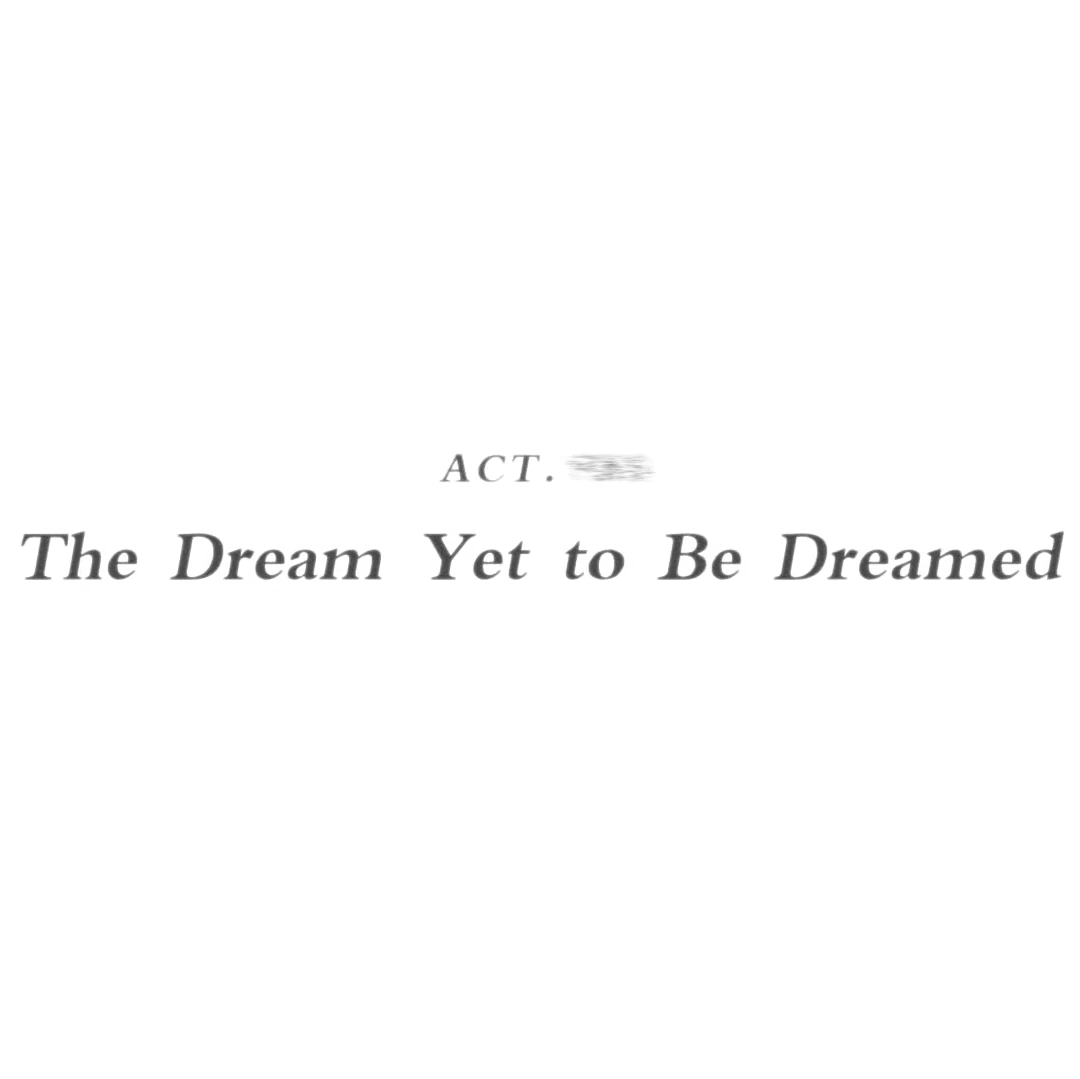
Screenshot from Teyvat Chapter Storyline Preview: Travail
- In the trailer Teyvat Chapter Storyline Preview: Travail, unlike the Seven Nations who each have a line written in Teyvat's Latin script, there is nothing under the title of its featured quest The Dream Yet to Be Dreamed.
- Jean's Voice-Overs mention a legend of a "heroic king of Khaenri'ah," which she offers to tell the Traveler about.
- The Eclipse Dynasty was previously translated as the Blacksun Dynasty.
- In the story told in the description of Bloodstained Final Hour, the Bloodstained Knight ventures into the Abyss, which he discovers was once a kingdom, those inhabitants were turned into monsters by a curse. A direct link with Khaenri'ah is not made though it could be speculated that the two are actually the same.
- A hilichurl tribe called the Eclipse tribe seems to be related to Khaenri'ah's Eclipse Dynasty.[28]
- The Traveler seems to know something about the Eclipse symbol used by the Eclipse tribe.[29]
- While it has been stated that Khaenri'ah's downfall was caused by the Heavenly Principles[30] and that The Seven, with the exception of Greater Lord Rukkhadevata, were summoned to Khaenri'ah,[31] it is yet uncertain whether The Seven were directly involved in its destruction.
- Dainsleif claims that the gods descended upon Khaenri'ah and brought desolation to the nation.[11] Considering Dainsleif's hatred for the Seven, the fact that he broadly refers to them as "gods," and the fact that, according to Dainsleif, the destruction of Khaenri'ah is the reason why the Abyss Order seeks to destroy the nations watched over by The Seven, it is implied that Dainsleif believes the Archons were directly involved in Khaenri'ah's destruction.[21]
- Ei says that when she arrived in Khaenri'ah, she saw a battlefield of scorched earth on the level of Musoujin Gorge caused by the current Pyro Archon of that time, Mavuika.[32] It is unknown whether Mavuika was targeting Khaenri'ah or targeting the Abyssal monsters spewing forth.
- Egeria, the current Hydro Archon of that time, was slain in Tunigi Hollow during the Cataclysm in an effort to surpress and combat the defilement seeping from Khaenri'ah, the nation right below.[33]
Etymology
- Khemia is phonetically similar to several etymological origins for the modern terms alchemy and chemistry. The origin of these terms are uncertain and multiple derivations exist.[34]
- One possible derivation is from the Arabic كيمياء kīmiyāʾ, "chemistry", which comes from Coptic term ⲕⲏⲙⲉ kēme, "Egypt". The Coptic term ultimately derives from the ancient Egyptian word 𓆎𓅓𓏏𓊖 kmt, referring to both the country Egypt and the color black.
- Other possible derivations are from the Ancient Greek χημεία khēmeía meaning "pouring" or "infusion," or the Ancient Greek metallurgical term χυμεία khumeía originally meaning "pouring together," "casting together," "weld," or "alloy."
- In Arabic, "alchemy" translates to خيمياء ḵīmiyāʾ.
- In Sumeru, Dahri is an archaic name for Khaenri'ah that's commonly used in the Vahumana Darshan.[35] The Arabic-Persian word "dahri" (Arabic: دَهْرِيّ dahriyy; Persian: دهری dahrī), derived from dahr (Arabic-Persian: دَهْر "the course of time, fate"), is a theological term which refers to an atheist, or an adherent of the doctrine that the universe has no beginning in time. The term has been used in different ways in Middle Persian and Islamic writings, but generally, dahri deny the existence of a creator god and believe that the world exists eternally in time.[36]
Cultural References
- Several elements of Khaenri'ah are most likely inspired by the Germanic legends, particularly the Nibelungen song.
- Most characters related to Khaenri'ah are named after Germanic/Norse myth and literature:
- Dainsleif — the name of a legendary sword.
- Haden — the king who wielded that sword.
- Alberich (Kaeya's surname) — the name of a dwarven king, also appearing in Richard Wagner's Der Ring des Nibelungen opera.
- Durin and Dvalin — the names of two dwarven smiths.
- Surtalogi — the name of the bright sword or flame wielded by the Fire Jotunn Surtr from Norse mythology.
- Hroptatyr — one of the names of Odin, meaning "sage."
- Rhinedottir — characters from Der Ring des Nibelungen based on Germanic mythology.
- Rerir — a powerful ruler in Germanic mythology who avenges his murdered father and is an ancestor of the Völsung clan, an important mythical lineage.
- Vedrfolnir — a hawk in Norse mythology that sits between the eyes of an unnamed eagle perched atop the world tree Yggdrasil.
- The Viking Age Norse equivalent for Irmin — Jörmunr, which is used in the Poetic Edda as an epithet for the Norse god Odin.
- Skofnungr — the name of a sword used by Hrólfr Kraki.
- Thrain — a barrow-wight from the Norse legend Hrómundar saga Gripssonar.
- The battle between gods and god-like powers caused a catastrophe onto the world, and Abyss Heralds still preach the burning and the end of the world. The concept resembles the event in Norse mythology called "Fate of the Gods" (Old Norse: Ragnarök) or "Twilight of the Gods" (German: Götterdämmerung) in the Nibelungen song. Dainsleif's title, "Twilight Sword," shares a similar wording.
- Most characters related to Khaenri'ah are named after Germanic/Norse myth and literature:
- Khaenri'ah's motto, "The land is [...] to be fought for with steel and blood,"[11] is likely to be a reference to "with iron and blood" (German: durch Eisen und Blut), a famous phrase used during the Blood and Iron Speech made by the Prussian minister president Otto von Bismarck in 1862.
- While the English version uses the wording "with steel and blood," the Chinese one uses "with iron and blood" (Chinese: 用铁和血) that exactly matches the wording of the historical speech.
Other Languages
| Language | Official Name |
|---|---|
| English | Khaenri'ah |
| Chinese (Simplified) | 坎瑞亚 Kǎnruìyà |
| Chinese (Traditional) | 坎瑞亞 Kǎnruìyà |
| Japanese | カーンルイア Kaanruia |
| Korean | 켄리아 Kennia |
| Spanish | Khaenri'ah |
| French | Khaenri'ah |
| Russian | Каэнри'ах Kaenri'akh |
| Thai | Khaenri'ah |
| Vietnamese | Khaenri'ah |
| German | Khaenri'ah |
| Indonesian | Khaenri'ah |
| Portuguese | Khaenri'ah |
| Turkish | Khaenri'ah |
| Italian | Khaenri'ah |
Change History
References
- ↑ 1.0 1.1 Book: Perinheri, Vol. 2
Alchemy and the Beastmaster Knights were a mainstay during the Crimson Moon Dynasty, but interest in mechanical engineering during the Eclipse Dynasty would cause it to fall behind. - ↑ Archon Quest, Chapter III, Act VI - Caribert, Part 1: Destined Encounter
Kaeya: You're a pure-blood Khaenri'ahn, aren't you? - ↑ Archon Quest, Interlude Chapter, Act II - Perilous Trail, Part 5: At Tunnel's End, Light
Yelan: That snake is probably a remnant of Khaenri'ahn civilization[...] - ↑ 4.0 4.1 YouTube: Collected Miscellany - "Albedo: Kreideprinz"
- ↑ Interactable: Someone's Abandoned Letter
- ↑ Archon Quest, Chapter III, Act VI - Caribert, Part 2: Fortune-Mocking Pedigree
Eide: [...] When the cataclysm came, we pure-blood Khaenri'ahns were declared the "greater sinners." Upon us, the gods placed the curse of immortality...
But those whose ancestry belonged to the domains of other gods were punished with the curse of the wilderness as they fled, turning them into monsters. - ↑ YouTube: Teyvat Chapter Interlude Teaser: The Gods' Limits
- ↑ Archon Quest, Chapter III, Act VI - Caribert, Part 1: Destined Encounter
Kaeya: [...] And my roots... They're in Khaenri'ah, which is said to have been located deep underground somewhere near Sumeru. - ↑ Sumeru, Gavireh Lajavard, Viewpoint: Gate of Everlasting Mourning
- ↑ YouTube: Teyvat Chapter Storyline Preview: Travail
- ↑ 11.0 11.1 11.2 11.3 11.4 Archon Quest, Chapter I, Act IV - We Will Be Reunited, Part 2: A Herald Without Adherents
- ↑ Character and Weapon Enhancement Material: Chaos Bolt
- ↑ Archon Quest, Chapter II, Act IV - Requiem of the Echoing Depths, Part 3: Memories of Inteyvat
- ↑ World Quest, Witch's Homework: Act None - Of Untested Insight: A Dry Well Doth Not Reflect the Stars
- ↑ Namecard: Achievement: Orbits
- ↑ Weapon: Crimson Moon's Semblance
- ↑ 17.0 17.1 Archon Quest, Song of the Welkin Moon, Act IV - An Elegy for Faded Moonlight, Part 1: All Is Foretold
- ↑ Albedo's Character Story: Character Story 3
- ↑ Venti's Voice-Over: About Albedo
- ↑ Archon Quest Act, Chapter V, Act VI: A Space and Time for You
- ↑ 21.0 21.1 Archon Quest, Chapter I, Act IV - We Will Be Reunited, Part 3: Dishonorable Trial
- ↑ 22.0 22.1 22.2 Archon Quest, Chapter I, Act IV - We Will Be Reunited, Part 4: A Soul Set Apart
- ↑ Archon Quest, Song of the Welkin Moon, Act III - A Nation That Doesn't Exist, Part 2: Special Operation
- ↑ YouTube: Genshin Impact Version 7.0 Special Program
- ↑ Book: Perinheri (II)
- ↑ Archon Quest, Chapter V, Act V - Incandescent Ode of Resurrection, Part 5: When All Becomes a Monument
- ↑ Archon Quest Act, Chapter II, Act IV: Requiem of the Echoing Depths
- ↑ Book: Hilichurl Cultural Customs
- ↑ Traveler's Voice-Over: About the Eclipse Tribe
- ↑ Archon Quest, Chapter II, Act III - Omnipresence Over Mortals, Part 8: The Omnipresent God
- ↑ Archon Quest, Chapter III, Act V - Akasha Pulses, the Kalpa Flame Rises, Part 4: Where the Boat of Consciousness Lies
- ↑ Raiden Shogun's Voice-Over: About Haborym
- ↑ Artifact, Vourukasha's Glow: Vibrant Pinion
- ↑ Wikipedia: Etymology of chemistry
- ↑ World Quest: Afratu's Dilemma
- ↑ Iranic Encyclopedia: Dahrī


